
Thank you for Subscribing to Healthcare Business Review Weekly Brief
× 
Healthcare Business Review Weekly Brief
Be first to read the latest tech news, Industry Leader's Insights, and CIO interviews of medium and large enterprises exclusively from Healthcare Business Review
A featured contribution from Leadership Perspectives: a curated forum reserved for leaders nominated by our subscribers and vetted by the Healthcare Business Review Advisory Board.

Lake Medical Imaging
Before It Becomes a Claim: Leading the Shift to Prospective Healthcare Risk Management
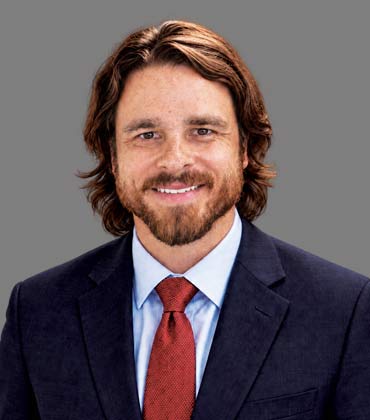
Josh Floyd
Healthcare risk management has traditionally been reactive. An adverse event occurs and an incident report is filed. Sometimes a claim follows, and months or even years later the organization determines what could have been done differently.
Throughout my career in healthcare risk management, I have reviewed adverse events, managed malpractice claims and worked with clinical teams to understand not only what happened, but why. One lesson has remained consistent: by the time a serious event reaches Risk Management, many of the opportunities to prevent it have already passed. That is why I believe the next evolution of healthcare risk management must be prospective rather than reactive.
Artificial intelligence is beginning to give healthcare leaders that opportunity. The greatest potential for AI in risk management is recognizing the conditions that historically lead to patient harm and litigation while there is still time to do something about them.
Moving Risk Management Upstream
Healthcare organizations generate an extraordinary amount of information every day. Imaging reports, laboratory results, critical values, patient complaints, incident reports, communication records and clinical documentation all contain potential indicators of risk. The problem is not a lack of information. The problem is our ability to identify the right information at the right time.
A risk manager cannot review thousands of medical records every day looking for a communication failure that may eventually harm a patient. AI can continuously monitor enormous amounts of information and identify predefined conditions requiring human attention. This does not mean asking an algorithm to determine negligence or replace clinical judgment. It means using technology as an additional layer of surveillance.
We have already seen this concept work with incidental and actionable findings. AI-assisted actionable finding management system analyzes radiology reports for follow-up recommendations and helps ensure those recommendations do not disappear once the report is finalized. The important part is not simply finding the recommendation. It is closing the loop and reducing patient harm, and therefore risk. The same concept can be applied to critical results.
AI can help identify critical values in a patient’s record that may have been overlooked. Additionally, these systems can make sure that the immediate communication occurs. Most healthcare organizations have policies requiring immediate communication of critical results. But a policy does not guarantee communication occurred.
Technology gives us the ability to ask different questions in real time: Was the critical result identified? Was the critical result communicated? Was receipt acknowledged? How much time has passed? Was the appropriate provider reached? Has the communication loop actually been closed?
The next evolution of healthcare risk management must be prospective rather than reactive.
If the answer is no, the system can escalate the issue while intervention may still make a difference. That is prospective risk management.
Imagine a system capable of recognizing combinations of events that individually may not appear alarming: an abnormal result, unsuccessful communication attempts, a patient complaint, missing follow-up documentation and an unresolved safety event. AI creates the possibility of connecting those signals much earlier.
The goal is not to have a computer declare, “This will become a malpractice claim.” The goal is for the system to say, “Something here requires a human to take a closer look.”
As risk leaders, our responsibility cannot end with managing a claim effectively. We have an obligation to take what adverse events and litigation teach us and move those lessons upstream. Every claim should potentially make the organization safer for the next patient. AI gives us an opportunity to move those lessons upstream at a scale that simply was not possible before.
Patient Safety First, Liability Reduction Second
There is an obvious financial argument for these systems. Medical malpractice litigation is expensive. So are delayed diagnoses, prolonged hospitalizations and preventable adverse events. But reducing lawsuits should never be the primary objective.
The question I continue to come back to in healthcare risk management is simple: What is best for the patient?
If technology identifies a missed follow-up before a cancer progresses, the patient benefits. If it catches an uncommunicated critical result before a patient's condition deteriorates, the patient benefits. If it identifies a dangerous process before another patient experiences the same failure, the patient benefits. Reduced liability exposure is the natural consequence of doing those things well.
For decades, healthcare risk management has often become involved after something went wrong. The next generation of risk leaders has an opportunity to change that timeline. We should be using systems that recognize the failures that lead to patient harm and give us the opportunity to protect the patient before a claim ever exists.
The articles from these contributors are based on their personal expertise and viewpoints, and do not necessarily reflect the opinions of their employers or affiliated organizations.
