
Thank you for Subscribing to Healthcare Business Review Weekly Brief
× 
Healthcare Business Review Weekly Brief
Be first to read the latest tech news, Industry Leader's Insights, and CIO interviews of medium and large enterprises exclusively from Healthcare Business Review
A featured contribution from Leadership Perspectives: a curated forum reserved for leaders nominated by our subscribers and vetted by the Healthcare Business Review Advisory Board.

Better Rehab
Clinical Governance Across The Nation: What It Takes To Lead A National Allied Health Workforce Across Clinic, Mobile and Telehealth Deliver
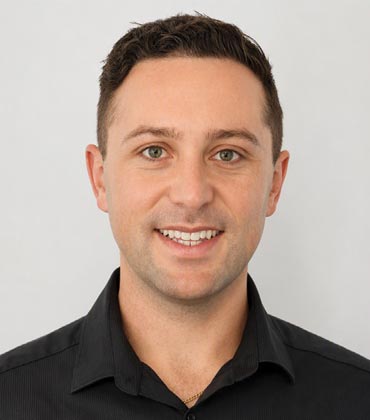
Todd Bartholomew
What Sparked This Focus and The Principles That Guide It
My focus on clinical governance across the nation grew out of a simple observation: what drives our clinicians has very little to do with where they’re based. Whether someone is working from a clinic, driving between home visits or delivering telehealth from a regional hub, the things that keep them engaged are the same; the quality of the patient care they’re able to deliver, confidence that standards are consistent no matter where they’re working and a genuine pathway for career growth. None of these should be determined by their location.
These really are the principles underneath the clinical governance framework for national geographically dispersed teams. Clinical supervision, mentorship, professional development, a clear scope of practice, someone senior to call when a case gets complex. These things must travel with the clinicians rather than relying on face to face support. A physiotherapist in a regional town should have access to the same clinical leadership, the same career progression and the same quality assurance as a colleague in a metro clinic.
In practice, this means designing support structures around clinical experience and competence rather than locations, consistent supervision frequency regardless of geography, discipline-based career pathways that don’t assume co-location and clinical leadership that’s just as accessible by phone or video as it is in person. When people trust that their development and their patients’ outcomes are protected no matter where they’re rostered, location and isolation stop being a limiting factor in recruitment and retention.
Keeping Standards Consistent Across Locations and Care Models
We anchor this through a small number of resources and systems that support clinicians on the day-to-day basis: standardised assessment tools and documentation templates, credentialing and clinical competence built around practice standards and structured clinical supervision. Technology plays a genuine role here, shared clinical systems mean a supervisor in Brisbane can review the quality of a note written in a client’s home in regional Tasmania just as easily as one written in a metro clinic.
Just as important is treating telehealth and mobile delivery as high quality care models in their own right, each with governance requirements suited to how they actually operate. Each mode has distinct clinical risks, telehealth around assessment limitations, mobile care around safety and infection control in unfamiliar environments and our governance must name those risks explicitly rather than assume clinic-based policies will simply transfer across.
Building Culture and Collaboration When Teams Rarely Meet In Person
Nationally distributed teams don’t build culture by accident; it must be designed. Our supervisors are practising clinicians in the field themselves, which means they genuinely understand the demands of a caseload, the realities of travel between visits and the pressures of delivering care in someone’s home rather than a controlled clinic environment. That lived understanding is what makes day-to-day support credible.
“A physiotherapist in a regional town should have access to the same clinical leadership, the same career progression and the same quality assurance as a colleague in a metro clinic.”
On top of that, we invest deliberately in structured group supervision and communities of practice by discipline, so a physiotherapist in a small regional town still has a professional community, even if their nearest colleague is hundreds of kilometres away. This is where the collaboration is built, clinicians bring cases to the group, learn from each other’s reasoning and stay connected to their profession as much as to their local team.
Recognition matters more, not less, in distributed teams. When people don’t share a physical space, it’s easy for good clinical work to go unseen. We try to make achievements visible, through case discussions, shared learnings and genuinely celebrating outcomes, so people feel supported by a team regardless of where they are based.
Where Hybrid Care Is Heading
The opportunity in hybrid models is reaching isolated communities with the same standard of care they’d get anywhere else. Rural and remote communities have real, ongoing demand for allied health support and hybrid delivery is how we meet it. That means resourcing telehealth and mobile care properly, rather than treating them as a lower cost substitute for clinic-based care when a client happens to live somewhere harder to reach. Access and quality aren’t a trade-off; one should not precede the other.
The challenge is workforce sustainability. Dispersed delivery can mean dispersed clinicians and the clinicians working hardest to reach rural and remote clients are often the ones most at risk of professional isolation. Governance must actively counter that through the kind of group supervision and peer community I’ve already mentioned, but also through practical support for the realities of remote/hybrid work.
Part of that support, increasingly, is helping clinicians navigate funding models that are themselves evolving quickly. As government and insurer-funded programs mature, guidelines are tightening and compliance expectations are rising and individual clinicians shouldn’t have to interpret that shift alone in the field. Building the systems and expertise to translate funding and regulatory change into clear, workable guidance for clinicians is becoming as central to clinical governance as supervision or credentialing ever was.
Advice For Leaders Building Dispersed Clinical Teams
Build your governance framework for your most complex delivery model, not your simplest one. If it works for hybrid, mobile and telehealth models, it will work in a clinic, but rarely the reverse. Get the reporting right early, distance inhibits you from seeing things first hand, but the information does not. And keep your supervisors close to the field, but back them with strong group supervision and collaboration, so clinical quality and retention always has a voice at the table alongside operational demands.
The articles from these contributors are based on their personal expertise and viewpoints, and do not necessarily reflect the opinions of their employers or affiliated organizations.
