
Thank you for Subscribing to Healthcare Business Review Weekly Brief
× 
Healthcare Business Review Weekly Brief
Be first to read the latest tech news, Industry Leader's Insights, and CIO interviews of medium and large enterprises exclusively from Healthcare Business Review
This article is part of Healthcare Business Review Insights series featuring expert contributions nominated by our subscribers and reviewed by our editorial team.
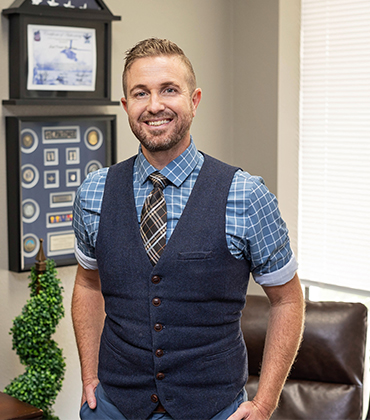
Dr. Daniel G. Gibson, PsyD, MSCP, founded GPS Psychology & Anxiety Clinic based on his extensive background and experiences, particularly in the military and his education at Pacific University. His work with top officials within the government, including roles at Air Force Medical Operations Agency (AFMOA) and Defense Health Headquarters/Pentagon, provided him with a deep understanding of where healthcare needed to go, especially focusing on the patient-centered medical home model of care. This experience, coupled with his training under experts in exposure therapies for anxiety, OCD, and trauma-related disorders, inspired him to create a clinic that emphasizes learning about the direction of healthcare while providing evidence-based and science-driven care.
Currently, GPS Psychology & Anxiety Clinic is expanding its services to meet the needs of the community. Dr. Gibson is preparing to set up residential, Intensive Outpatient (IOP), and outpatient facilities dedicated to treating severe OCD, Panic Disorder, and other anxiety-related presentations. This expansion includes integration of advanced biological interventions such as neurofeedback and Transcranial Magnetic Stimulation (TMS), coupled with psychoeducation and evidenced-based interventions, to provide comprehensive and targeted care. Another provider within the clinic is focusing on establishing a neurodevelopmental/neurological center with an emphasis on using neurofeedback assessments throughout treatment processes for affiliated patients.
GPS Psychology & Anxiety Clinic’s Services
At GPS Psychology & Anxiety Clinic, the services offered follow a patient-centered medical home model with a strong emphasis on science-driven and evidenced-based care. One of the key services provided is clinical psychology, which includes psychological and neuropsychological testing. This addresses a common problem in other clinics where long waitlists, ranging from 1 to 2 years, hinder access to care. Dr. Gibson bridges this gap by using advanced technology for data gathering and employing trained mental health technicians to enhance the quantity and quality of services.
The clinic's approach also includes hiring and training practitioners in evidenced-based practices following the biopsychosocial model of care. This ensures accuracy in diagnoses and appropriate interventions, with a focus on empowering patients to become agents in their own change and prevent relapse. Adjunctive treatments are provided to ensure comprehensive care, including EEG/Neurofeedback assessments for biological data gathering and tracking progress, biofeedback stress assessments and interventions, and comprehensive labs and medical care that align with patient values. In addition to biological data, they utilize electronic medical record systems to integrate standardized narrow- and broad-band psychological measures aimed at assessing the clinical severity of specific presentations (e.g., using the Yale-Brown Obsessive Compulsive Scale (Y-BOCS) to evaluate the severity of OCD symptoms). They also employ a statistical formula known as the Clinical Significant Change Index, which determines whether there has been a statistically significant change in the clinical presentation. This index has been validated to ascertain when treatment can conclude and to gauge the reduction of relapse risk.
To improve access to care further, GPS offers Behavioral Health Consulting services, operating on a primary care model of behavioral health. These appointments are shorter in duration and time-based, focusing on specific symptoms and providing evidence-based interventions. This model aims to educate patients and their support systems on symptom causes and maintenance, equipping them with resources for self-improvement. The clinic integrates medical care as needed, whether traditional or natural interventions, based on patient values and biological variables impacting behavioral health.
At GPS Psychology & Anxiety Clinic, the services offered follow a patient-centered medical home model with a strong emphasis on science-driven and evidenced-based care.
Currently, GPS Psychology & Anxiety Clinic is expanding its services to meet the needs of the community. Dr. Gibson is preparing to set up residential, Intensive Outpatient (IOP), and outpatient facilities dedicated to treating severe OCD, Panic Disorder, and other anxiety-related presentations. This expansion includes integration of advanced biological interventions such as neurofeedback and Transcranial Magnetic Stimulation (TMS), coupled with psychoeducation and evidenced-based interventions, to provide comprehensive and targeted care. Another provider within the clinic is focusing on establishing a neurodevelopmental/neurological center with an emphasis on using neurofeedback assessments throughout treatment processes for affiliated patients.
In summary, Dr. Gibson's background and vision have shaped GPS Psychology & Anxiety Clinic into a center that not only provides cutting-edge services but also prioritizes patient-centered, evidence-based care in alignment with the evolving landscape of healthcare.
MORE FROM INSIGHTS


Med4u
Anna Verhoustinska, Board Member
Life in Motion: Med4u - Emergency Heartbeats in Latvia and Around the World

TheSoundWell
Avigaili Berg, CEO
The Added Value of Creating A Wellness-Wellbeing Culture in Your Healthcare Facility

Punches Consulting
Dustin Raney, Contracting Consultant
Winning for our providers with payor contracts
EXPLORE OUR KNOWLEDGE NETWORK
The articles from these contributors are based on their personal expertise and viewpoints, and do not necessarily reflect the opinions of their employers or affiliated organizations.
