
Thank you for Subscribing to Healthcare Business Review Weekly Brief
This article is part of Healthcare Business Review Insights series featuring expert contributions nominated by our subscribers and reviewed by our editorial team.
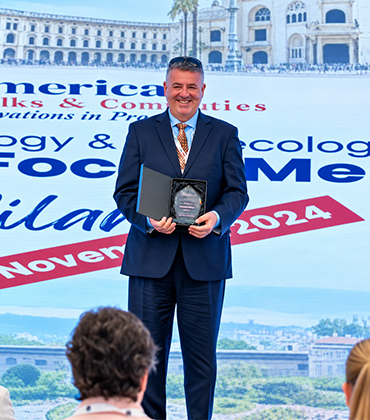
When I speak with physicians at our congresses, I notice the questions have changed. A few years ago, most of them wanted to know whether regenerative treatments worked at all. Today they ask something more practical: how do I perform this properly, and how do the patients who need it actually reach me? That shift says a lot about where the field stands.
Finally, medical tourism itself carries risk. Too many companies in this space are travel agencies with a healthcare label. When care is organised around flights and hotels rather than clinical fit, follow-up and accountability get lost at the border.
Three Trends Shaping the Field
The first is precision. Regenerative medicine is moving away from "inject and hope" toward image-guided, diagnosis-first care. Ultrasound now sits at the centre of how good physicians work. At our RMOS summit in Tokyo this year, the ultrasound master class filled the room with people standing outside, and the final day was a full hands-on bootcamp with nine stations. Physicians understand that a biologic placed in the wrong structure is wasted, and that many patients who arrive after years of failed treatment were never correctly diagnosed to begin with.
The second is the move to autologous, point-of-care treatment. PRP, bone marrow concentrate, fat-derived and blood-derived products all start from the patient's own tissue and are prepared at the bedside. This is where much of the device innovation is happening, and in our experience the best ideas come from clinicians. All three of our proprietary devices grew out of collaboration with physicians in our own network.
The third is that patients are willing to travel. In June, our Centre of Excellence in Belgrade treated eleven patients from six countries in a single day. These were people who could not find the right specialist at home and chose to cross borders rather than keep waiting.
The Challenges We Cannot Ignore
The biggest obstacle is training. A lecture can explain a technique, but it cannot teach a physician where a needle belongs. That is why our societies put so much weight on live demonstrations, cadaver labs and small-group teaching. Adoption will only grow as fast as competence does.
The second is access and cost. Many regenerative procedures still sit outside insurance coverage. Physicians are often uncomfortable explaining unfamiliar treatments or discussing out-of-pocket costs, and patients are left to sort through online claims alone. This is where the field is most exposed.
Overpromising damages trust for everyone, and responsible patient selection, including telling a patient when they are not a good candidate, is part of the treatment.
The third is regulation. In Europe, the new SoHO Regulation on substances of human origin will change how many clinics work with biological material from 2027. I see this as a good thing. Higher standards raise the floor for the entire field, but clinics that have not started preparing should do so now.
-
The next decade in regenerative medicine will not be decided by who has the newest therapy. It will be decided by who can deliver it accurately and honestly to the patients who need it most.
Finally, medical tourism itself carries risk. Too many companies in this space are travel agencies with a healthcare label. When care is organised around flights and hotels rather than clinical fit, follow-up and accountability get lost at the border.
Expanding Access, Evidence and Patient Education
The greatest opportunity is connecting education to access. For more than a decade, we built a physician network through three medical societies, the Global Regenerative Academy, the Regenerative Medicine Orthopaedic Society and the American Urology and Gynecology Society. Those physicians now form the backbone of Global Regenerative Health, which connects patients with centres of excellence led by faculty who teach the techniques they perform. The patient is not matched with whoever has availability, but with a specialist trained to a shared standard.
The second opportunity is evidence. Networks that share protocols, documentation and follow-up across countries can generate the kind of real-world data this field still needs. Medical societies are well placed to lead that work.
The third is speaking to patients directly. On sixth December in Dublin, we will hold our first regenerative health summit, where physicians will explain regenerative medicine in plain language and patients can meet specialists in person. Patients deserve to understand their options before they search for them online.
The next decade in regenerative medicine will not be decided by who has the newest therapy. It will be decided by who can deliver it accurately and honestly to the patients who need it most.
MORE FROM INSIGHTS

Med4u
Anna Verhoustinska, Board Member
Life in Motion: Med4u - Emergency Heartbeats in Latvia and Around the World

TheSoundWell
Avigaili Berg, CEO
The Added Value of Creating A Wellness-Wellbeing Culture in Your Healthcare Facility
Punches Consulting
Dustin Raney, Contracting Consultant
Winning for our providers with payor contracts
EXPLORE OUR KNOWLEDGE NETWORK
The articles from these contributors are based on their personal expertise and viewpoints, and do not necessarily reflect the opinions of their employers or affiliated organizations.
