


 Dr. Alvaro Luis Lopes Quintas, Head of Health
For Hospital São Marcelino Champagnat, the question guiding its technology adoption decisions is: "What benefit does the technology bring to the patient and the physician?"
A pioneer in offering robotic surgery, the hospital views the technology as a strategic fit for the clinical demands of its strongest specialties, including orthopedics, general surgery and neurosurgery. The technology offers surgeons greater precision, enhanced instrument control and improved visualization, supporting work in complex or hard-to-reach anatomical areas. For patients, these capabilities can contribute to more precise procedures, shorter surgical times and smoother recovery, depending on the procedure and individual clinical condition.
Part of Grupo Marista, a group spanning healthcare and education, the hospital draws on its academic and clinical expertise to guide the adoption. Cajuru University Hospital serves as Hospital São Marcelino Champagnat’s teaching and research arm to train and update healthcare professionals. Hospital São Marcelino Champagnat evaluates each technology against its potential to address clinical needs and improve patient care.
“We ensure new technologies are supported by scientific evidence and have proven their value before adopting,” says Dr. Alvaro Luis Lopes Quintas, head of health at Grupo Marista.
University professors act as guardians of good medical practices, bringing knowledge about new technologies from congresses and seminars. The hospital also considers investment and return on investment, an important factor within Brazil’s economic context. Discussions with clinical teams and targeted studies help determine where a platform can make a difference. Before proceeding, the hospital examines the evidence, expected benefits, training requirements, operating-room integration, technical support, operating and maintenance costs and its ability to monitor outcomes. It also assesses whether the necessary infrastructure and professional credentialing arrangements are in place to sustain the technology safely.
We ensure new technologies are supported by scientific evidence and have proven their value before adopting.
The hospital’s approach to robotic surgery also reflects its broader institutional priorities. Hospital São Marcelino Champagnat is guided by key institutional pillars—healthcare, quality and security, sustainability and education—and human values run through them all. The hospital describes this as the “virtual cycle,” in which patient care, clinical volume, medical education and practical experience reinforce one another. Within this cycle, clinical experience supports the training of future doctors in robotic technology, connecting medical education with the development of its robotic surgery program.
A Program Built Around Experience
The hospital’s robotic surgery program currently encompasses three platforms—Mako, Da Vinci and ROSA Knee—serving different clinical needs. Mako and ROSA Knee are used in orthopedics, mainly for hips and knees, while Da Vinci supports general surgery, urology, bariatric surgery and gynecology as part of a program that now spans seven specialties.
Hospital São Marcelino Champagnat is the first hospital in Paraná to adopt Mako SmartRobotics™.
 Mako uses CT-based three-dimensional planning to determine implant size, alignment and positioning according to the patient's anatomy. During surgery, its AccuStop technology establishes virtual boundaries based on the surgical plan, helping the surgeon work within predefined parameters while preserving bone and soft tissue. In knee procedures, the system also supports adjustments to stability and alignment before the final bone cuts. More accurate implant positioning can contribute to implant longevity and reduce future revision procedures.
The clinical value of Mako is reflected in individual patient experiences. In one instance, a 67-year-old patient presented with advanced hip osteoarthritis, unable to kneel, sit, or get out of bed without assistance, and no longer responding to physical therapy. She underwent total hip arthroplasty using the Mako system. On the day of surgery, she was already standing with the aid of a walker, and within a week, she reported evident functional improvement. The more precise implant positioning helps reduce factors associated with immediate postoperative pain, and it is this reduction that enables such early mobilization.
ROSA Knee assists orthopedic surgeons with planning, bone cuts and prosthesis positioning according to the patient's anatomy, helping make knee replacement procedures more predictable.
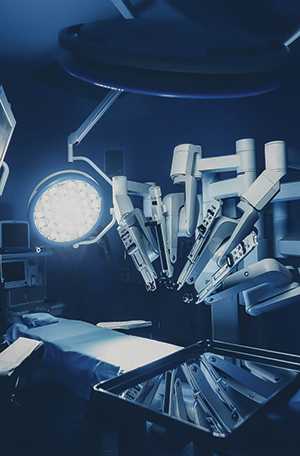
Da Vinci X combines enhanced three-dimensional visualization with articulated instruments that replicate the surgeon's wrist movements while filtering physiological tremor. These features provide greater control in deep or confined anatomical spaces, supporting procedures involving vascular dissection, nerve preservation and precise suturing.
Its broader range of robotic applications also includes oncological, thoracic, digestive tract and head and neck surgery. Its Robotic Surgery Center brings these procedures together through specialized, integrated teams.
More than 700 robotic surgeries were performed in 2026, with numerous surgeons operating on the platforms. The overall robotic program has grown by 8 percent compared with the same period in 2025. Mako usage increased by 42 percent over the same period.
The volume matters. More procedures give surgeons opportunities to practice, understand the technology’s limits and refine their techniques. This experience helps them make better-informed decisions about patient care.
Before a procedure is performed robotically, the surgeon considers the diagnosis, anatomy, clinical condition, risks and treatment goals. The robotic platform then helps the surgeon execute the surgical plan with greater precision.
The Surgeon Remains at the Center
Robotics does not replace clinical judgment but enhances the ability of a professional. 3D visualization, tremor filtration, greater instrument movement and precision in difficult anatomical areas are its key features. Depending on the procedure and patient, these capabilities can support less invasive procedures, reduce bleeding and postoperative pain, shorten hospital stays and recovery time. In robotic-assisted orthopedic surgery, personalized planning and precise implant positioning guide the procedure.
-
The true benefit lies in combining the surgeon’s knowledge and experience with a precision tool dedicated to patient care.
Before a procedure is performed robotically, the surgeon considers the diagnosis, anatomy, clinical condition, risks and treatment goals. The robotic platform then helps the surgeon execute the surgical plan with greater precision.
“The true benefit lies in combining the surgeon’s knowledge and experience with a precision tool dedicated to patient care,” says Dr. Quintas.
Established protocols are followed, including preoperative examinations, intraoperative monitoring and postoperative follow-up. The hospital also uses a clinical governance framework built around standardized safety protocols and maintains traceability of each procedural step. Clinical indicators and data generated by the robotic platforms support ongoing monitoring and review, allowing teams to assess outcomes and improve protocols.
The Cajuru University Hospital plays a role in credentialing and training. Because robotic surgery involves surgeons, anesthesiologists, nursing professionals and other staff, everyone must understand the technology and the dynamics of the procedure. The entire multidisciplinary team is trained, with planning, maintenance, clinical and anesthesiological support forming part of the program. Continuous training and updates complement formal credentialing and supervised practice.
Quality and patient safety remain central to care, and the Joint Commission International (JCI) accreditation reflects its adherence to international healthcare standards.
Strengthen Surgical Practice
Hospital São Marcelino Champagnat draws on the broader clinical and educational experience of Grupo Marista's healthcare network. Hospital Universitário Cajuru, which has more than six decades of experience in emergency and trauma care, provides an important teaching environment. Exposure to diverse clinical cases helps medical professionals develop the judgment needed to assess when advanced surgical technologies, including robotics, are appropriate.
 The university connection makes every robotic procedure part of a larger educational process. Residents participate in procedures. Surgeons attend courses, share experiences and present hospital cases at medical conferences. That experience becomes more valuable when shared. The team discusses what worked well, identifying challenges and considering how specific situations could have been handled differently. The experience accumulated through the robotic program helps guide professionals entering new specialties and informs training and, when necessary, adjustments to protocols, communication, patient positioning, equipment preparation and responses to complications.
Measuring Outcomes to Improve Patient Recovery
Clinical experience is complemented by tracking patient outcomes and monitoring patient experience through the net promoter score, patient comments and other measures. To evaluate patient recovery beyond the operating room, the hospital's Value Office gathers patient-reported information for selected hip and knee procedures. Measures including pain, mobility, daily activities and satisfaction complement clinical indicators, helping teams assess where care is meeting expectations and where improvement may be needed.
The objective is not simply a shorter hospital stay.
“We help patients return to their routines and activities in the best possible condition and within the shortest safe timeframe,” says Quintas.
Its clinical team points to patients returning to activities such as football, snowboarding and skiing as practical signs of progress.
Building the Future of Robotic Surgery
Hospital São Marcelino Champagnat is not treating its current robotic program as an endpoint.
As Da Vinci volumes continue to increase, it is considering another general robotic platform. It is also evaluating future applications for Mako, including the shoulder and spine, as orthopedic specialists continue to build experience.
Hospital São Marcelino Champagnat earns the Robotic Surgery Solutions of the Year in Latin America 2026 award for its strategic adoption of robotic surgery, balancing clinical needs, surgeon training and long-term program sustainability to meet patient needs.
Evaluating Robotic Surgery Beyond Platform Capabilities
An advanced robotic surgery system can be an expensive investment if a hospital lacks the trained surgeons or patient volumes to make full use of it. Sharing equipment across departments can make operating room scheduling difficult. Ownership costs remain, even when the system sits idle. For hospital executives, evaluating a robotic surgery program means understanding how the equipment will be used in everyday clinical practice.
The choice of technology depends on the type of surgery a hospital plans to offer. A robotic system designed for joint replacement has different capabilities from one used in minimally invasive abdominal surgery. Before choosing a platform, hospitals need to consider how many patients are likely to undergo these procedures and whether enough qualified surgeons are available. These factors help determine whether the investment is justified.
An experienced surgeon may still need considerable training to work with robotic instruments. Hospitals must establish clear training requirements before granting surgeons permission to perform robotic procedures independently. Supervised surgeries provide an opportunity to assess their skills under established clinical protocols. Surgeons also need to maintain their skills after certification, particularly if they perform robotic procedures infrequently. A university affiliation can support this training, but each platform requires clearly documented training standards.
How well patients recover is another important consideration. Certain robotic procedures may be associated with shorter hospital stays and quicker recovery, although much depends on the patient’s condition and the surgery performed. Tracking recovery across relevant patient groups helps hospitals assess these outcomes. The time taken to complete procedures and the frequency of complications also offer useful information. Without reliable data, hospitals may struggle to establish whether better outcomes are linked to robotic assistance or other clinical factors.
“Hospital Saint Marcellin prepares surgeons for robotic procedures through a university-linked training program that includes credentialing and supervised surgery.”
Deciding which patients could benefit from robotic surgery remains a medical responsibility. Physicians assess each patient before surgery to determine whether robotic assistance is appropriate. Clinical protocols guide these assessments, but doctors make the final decision. Monitoring patients after surgery can help identify complications that were not apparent during the procedure. Regular reviews of these practices and their results can help hospitals improve patient care.
Buying the equipment is only the beginning of the financial commitment. Hospitals must budget for maintenance, additional surgical instruments and staff training. As more surgeons begin using the equipment, operating room schedules may also need to change. The decision to purchase another system should reflect how frequently existing equipment is used and whether the hospital has enough trained surgeons to meet growing demand.
Hospital Saint Marcellin uses Mako and ROSA Knee systems for orthopedic surgery and the da Vinci platform for other surgical specialties. It performs approximately 50 to 60 robotic procedures each month, including joint replacements and minimally invasive surgeries.
Hospital Saint Marcellin prepares surgeons for robotic procedures through a university-linked training program that includes credentialing and supervised surgery. Established clinical protocols guide patient assessment before surgery and recovery monitoring afterward.
The hospital monitors patient recovery and surgical performance as part of its quality management practices, supported by Joint Commission International accreditation. As demand for robotic surgery grows, it evaluates whether additional equipment is needed.
For healthcare organizations studying established robotic surgery programs, Hospital Saint Marcellin demonstrates how different robotic platforms can be used within a clinical program supported by surgeon training, patient assessment and regular monitoring of surgical outcomes.
...Read more
